Free CRM Software for Small Business: What’s the Catch?
Free sounds sensible when you are tracking customers in a spreadsheet. This post shows what free plans usually hold back, what it costs when you outgrow one, and when free is the right call.
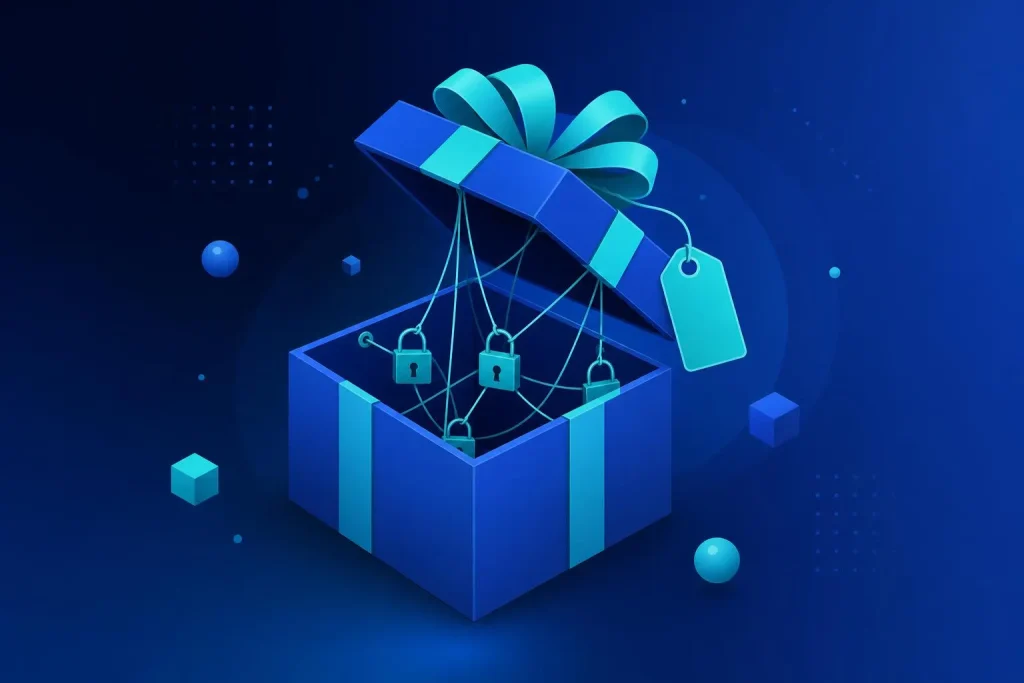
Free is a sales funnel, and that is fine
A free CRM plan is a product the company gives away so that you will pay for the next tier. That is not sinister. It is how most software is sold now.
But it does mean the limits are not random. They sit exactly where a growing business starts to feel pain. Understanding where those limits fall tells you whether free will last you six months or six years.
If you are new to the idea, start with our guide to CRM for small business. It covers what a CRM does and who needs one.
What free plans usually limit
Number of users
Often one to a handful. The moment a second person needs to see the pipeline, you are looking at a paid plan.
Contacts or records
A cap on how many people or companies you can store. Fine at 200. Awkward at 5,000.
Automation
Reminders, follow-up sequences and workflows are typically the first things moved behind a paywall.
Reporting and exports
Basic lists are free. Custom reports, dashboards and full data exports often are not.
Limits change, and every vendor does it differently. So check the current pricing page rather than trusting a comparison article, including this one.
The catch nobody puts on the sign-up page
The visible limits are easy to spot. The expensive ones are quieter.
- Your data lives on their servers. It is your customer list, but you are renting the place it sits. If the plan changes or the product closes, you are on their timetable.
- Getting data out can be awkward. Some tools export contacts easily but not notes, history or attachments. Test an export in week one, not year three.
- The upgrade is a step, not a slope. You go from free to a paid tier priced per person per month. A five-person team can jump from nothing to a real monthly bill overnight.
- Add-ons creep in. The tier you need often leaves out the one feature you actually wanted, which sits in a higher tier or a paid app.
- You shape your process around the tool. Free tools are built for the average business. Yours probably is not, and workarounds cost time.
What upgrading really costs
The honest way to price a CRM is over three to five years, not one month. The shape of the sum is simple.
Paid plans are usually priced per user per month. Multiply by the people who need access, by twelve, by the number of years. Then add the extras for automation, reporting and integrations. A number that looked small as a monthly line item rarely stays small as a five-year total.
Compare that with a one-off build you own. We build custom CRMs as fixed-price projects in the £3.5k–£9.5k range, with no per-seat fees, and you own the result. That is not right for everyone, and the next section covers who should stay on free.
Not sure if you have outgrown free?
Our comparison of custom CRM against off-the-shelf lays out the trade-offs without a sales pitch.
Read the comparison Book a free call
When free is exactly right
We are a custom software company, and we will still tell you that plenty of businesses should use a free CRM. You are a good fit for free if:
- You are one to three people with a simple sales process.
- You have a few hundred contacts, not thousands.
- You mostly need a place to log calls, notes and follow-up dates.
- You do not need the CRM to talk to your invoicing, stock or ordering.
- You are testing whether a CRM habit will stick at all.
Honestly, that last point matters most. A CRM only works if people use it. Prove the habit on something free before spending anything.
If you do start free, set one rule from day one: every contact goes in with an email address, a source and a next action. Clean data moves anywhere later. Messy data is what makes switching painful.
Signs you have outgrown it
Watch for these. Two or more usually means the free plan is costing you more than a proper system would.
- You keep a spreadsheet alongside the CRM because it cannot hold something you need.
- Staff re-type the same details into your accounts or order system.
- Someone has asked for a report the tool cannot produce.
- You are paying for three add-ons to do what one process should.
- The way you work is bending to fit the software, not the other way round.
A good example from our own work is ASD OrderHub. A group of four limited companies needed orders, purchasing, stock and accounts in one place. No ready-made tool matched how they ran, so we built one: 4 companies, 1 dashboard, zero double entry. If your process is that specific, our piece on bespoke vs off-the-shelf software is worth reading next, along with custom CRM development.
A quick worked example
Say you run a four-person training company. You start on a free plan with one login. That works for a month, then two colleagues need to see enquiries, and the plan wants a paid tier for each of them.
You also want an automatic follow-up after a course booking, which sits one tier higher again. Now you are paying for four people, plus a higher tier for one feature, every month, indefinitely.
None of that is unfair. It is just not free any more. The useful habit is to price your realistic team of year two, not your team of day one.
Four questions to ask before you sign up
| Question | Why it matters |
|---|---|
| Can I export everything, including notes and history? | It decides how easy it is to leave |
| What exactly happens at the user or contact limit? | Some tools stop you adding data, others jump you to paid |
| Which features are on the next tier up? | Shows the real price of the thing you actually want |
| Where is the data stored, and who can see it? | Customer data carries legal duties under UK data protection rules |
Frequently asked questions
Is there a completely free CRM with no limits?
Not from a company that has to make money. Open-source options exist, but you then pay in setup time and hosting. Hosted free plans are always limited somewhere, usually users, records, automation or reporting.
Is it safe to put customer data in a free CRM?
It can be, but you are still responsible for that data under UK data protection law. Check where the vendor stores it, who can access it, and how you export or delete it.
When should a small business move from free to paid?
When you are working around the tool: duplicate spreadsheets, re-keying data, missing reports or extra add-ons. Waiting too long means migrating more data later.
Can a custom CRM be cheaper than a paid subscription?
Over several years, often yes, because there are no per-user fees and you own it. It depends on team size and how specific your process is. We run the numbers with you before any commitment.
Can I move my data from a free CRM into a custom one?
Usually yes, if you can export it in a clean format. That is another reason to test an export early and keep your own backup.
Free for now, or time to plan something that fits?
Tell us how you work today and we will say honestly whether free, paid or custom makes sense.
Book a free 30-minute call See our prices